Ready to tow with confidence? The TowPro Academy truck towing course covers everything you need — from hitching up correctly to backing a trailer like a pro. One-time payment of $79, access for as long as the course is hosted, 51 video lessons.
How to Back a Boat Trailer into a Ramp: Step-by-Step Guide
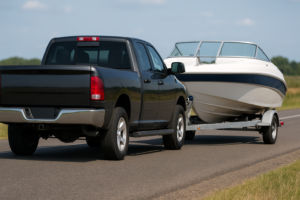
Knowing how to back a boat trailer into a ramp is one of those skills that separates confident boaters from nervous ones. Whether it’s your first time at a boat launch or you just want to sharpen your technique, this guide walks you through every step — from pre-launch prep to ramp etiquette.
Before You Arrive at the Ramp
Preparation before you get to the ramp will save you time and embarrassment. Do these things in a parking lot or driveway first:
- Practice backing in an empty lot before going to a busy launch.
- Load your boat and check that it’s properly secured to the trailer.
- Check your lights — trailer lights should be working before you get near the water.
- Remove transom straps and tie-downs (but leave the bow line attached).
- Install the drain plug before the boat hits water — this is critical.
Understanding the Steering Principle
Watch a Free Lesson
See how TowPro Academy teaches it step by step. Jeff McDonough, the founder, has 10+ years and 250,000+ miles of towing behind him.
The biggest challenge when backing a trailer is that it feels backwards. When you turn the steering wheel left, the trailer goes right, and vice versa. Here’s a tip that helps: place your hand at the bottom of the steering wheel. Whichever way you move that hand is the direction the trailer will go.
Step-by-Step: How to Back a Boat Trailer into a Ramp
Step 1: Survey the Ramp
Pull forward past the ramp and take a look. Note the angle of the ramp, where the dock is, water depth, and any obstacles. If the ramp curves, plan your approach accordingly.
Step 2: Set Up Your Approach
Position your vehicle so you have a straight shot at the ramp. Being straight before you start backing is the most important setup move you can make. Most beginners make the mistake of starting crooked and overcorrecting the whole way down.
Step 3: Go Slow and Use Your Mirrors
Back at idle speed — there’s no rush. Use both side mirrors to watch the trailer. Look for the trailer tongue in your mirrors; it should stay centered. If the back of the trailer drifts left, turn your wheel slightly left (hand at bottom = trailer goes left to correct).
READY TO STOP GUESSING?
LEARN THE RIGHT WAY. BUILD THE SKILLS TO TOW MORE SAFELY.
Build the skills to tow more safely. 51 video lessons, one-time payment.
ENROLL NOWOne-time payment - 30-Day money-back guarantee
Step 4: Back Down to the Water’s Edge
Guide the trailer down the ramp until the rear wheels are near the water. Stop and check your positioning before going further. The trailer bunks or rollers should be close to submerged before you unhook the boat.
Step 5: Launch the Boat
With the parking brake set and engine off, unhook the winch strap and let the boat float off the trailer. Have your bow line ready so the boat doesn’t drift. Then pull your truck and trailer out of the water immediately — don’t block the ramp.
Free Download
Never Miss a Safety Check Again
The exact 66-point checklist Jeff runs before every tow, so small problems get caught before they become breakdowns. Enter your email and we will send it over.
Free PDF · Instant download · No spam, unsubscribe any time
Common Mistakes to Avoid
- Forgetting the drain plug — your boat will sink. Always check this first.
- Going too fast — slow and steady gives you time to correct.
- Not pulling forward to straighten up — if your trailer is jackknifed, pull forward and reset.
- Skipping the pre-ramp prep — doing it on the ramp holds up everyone behind you.
Ramp Etiquette
Respect other boaters by being prepared before you approach the ramp. Do your prep in the staging area — not on the launch. Keep your time on the ramp to a minimum, and if you need practice, choose a less busy time of day.
Final Thoughts
Learning how to back a boat trailer into a ramp takes practice, but with the right technique it quickly becomes second nature. Start in a quiet parking lot, take your time at the ramp, and remember: the hand-at-the-bottom trick works every time. Want to build more towing confidence? TowPro Academy covers everything from hitching up to backing trailers in 51 video lessons.
Common Mistakes When Backing a Boat Trailer
Even experienced boaters make these mistakes. Knowing them in advance helps you avoid them:
- Going too fast: Speed is the enemy of trailer backing. The faster you go, the less time you have to correct. Slow down to a crawl and make small, deliberate adjustments.
- Over-correcting: Small steering inputs have large effects on trailer direction. A tiny move of your hand at the bottom of the wheel is all you need. Over-correcting causes the trailer to jackknife.
- Losing your reference point: Pick a fixed visual reference in your mirrors — a dock post, a lane marker, a tree — and use it to track your trailer direction. Without a reference, you are guessing.
- Not checking clearance on both sides: Boat ramps are narrow. Always check both mirrors, not just the one on the side you are steering toward.
- Skipping the spotter: A second person watching from outside the vehicle and communicating with hand signals makes backing at a ramp far easier and safer. If someone offers to help, accept it.
Backing a Boat Trailer Solo: Tips for When You Are Alone
Sometimes you are at the ramp alone. Here is how to handle it:
- Choose a time when the ramp is quiet — early morning on weekdays is ideal for practice runs.
- Use a backup camera if your truck has one. The camera eliminates the need to turn your head and helps you see both sides of the trailer at once.
- Open your windows so you can hear if anyone is trying to signal you from outside.
- If you get off track, do not try to save it. Pull forward, straighten up, and start the approach again. There is no shame in resetting — it is faster than trying to correct a bad angle at the bottom of the ramp.
Ramp Etiquette: What Every Boater Should Know
Boat ramps get busy, especially on summer weekends. Proper etiquette makes the experience better for everyone:
- Prepare before you back up. Remove tie-downs, load gear, and get the boat ready to launch while you are still in the parking lot — not on the ramp.
- Keep it moving. Once you start down the ramp, keep the process efficient. Other boaters are waiting.
- Retrieve your trailer promptly. After launching, move your truck and trailer to the parking area before boarding your boat.
- Do not block the ramp while waiting for others in your party. Pull to the side or into the staging area.
- Offer to help. Experienced boaters helping beginners back down the ramp is a tradition. Pass it forward.
Retrieving Your Boat: Backing Down After a Day on the Water
Retrieving the boat is the reverse of launching — but it comes with its own challenges. You are likely more tired, the ramp may be more crowded, and the boat can shift unexpectedly as it comes onto the trailer. Here is the process:
- Back the trailer down until the bunks or rollers are submerged to the depth needed to float the boat onto the trailer.
- Drive or idle the boat straight onto the trailer. Aim for center. Have your bow line ready to grab as soon as the boat reaches the bow stop.
- Winch the boat forward fully onto the trailer until the bow is snugged against the bow stop.
- Pull forward out of the water before attaching all straps and tie-downs.
- Move to the parking lot to complete your tie-down before getting on the road.
Backing Practice: How to Build the Skill Quickly
The fastest way to get good at backing a boat trailer is deliberate, low-stakes practice. Set up some cones in an empty parking lot — or even just use painted parking stall lines — and practice backing between them. Do this without a boat attached first if possible. Practice backing straight, then backing with slight left and right corrections. The muscle memory you build in a parking lot transfers directly to the ramp.
Most people find that 3–5 focused parking lot sessions eliminates almost all of the anxiety and uncertainty around backing at a real boat ramp. The skill is not difficult — it just requires a bit of counter-intuitive thinking and repetition to make it feel natural.
Final Thoughts on Backing a Boat Trailer
Backing a boat trailer into a ramp is a skill that every boat owner needs to master — and it becomes easy with practice. Remember: hand at the bottom of the wheel, move your hand the direction you want the trailer to go, make small corrections, go slow, and do not be afraid to reset if the angle goes wrong. The ramp will still be there on your second attempt. For official boating safety guidelines at public boat launches, the U.S. Coast Guard’s recreational boating safety resources cover launch ramp etiquette and safety protocols every boater should know.
If you want to build all of your towing skills — including backing, weight distribution, hitch setup, and safe driving techniques — TowPro Academy’s truck towing course covers everything in 51 video lessons for a one-time payment of $79.
Stop guessing. Start towing with confidence.
The TowPro Course walks you through every skill in real road scenarios.
Step-by-step video lessons, a final exam, and printable lesson guides and checklists — everything in one place for $79 (fall special, reg. $99).
Enroll Now — $79 (Fall Special, reg. $99) →Read Next
- How to Back a Trailer
- What Is Trailer Sway?
- Towing Glossary
- New to Towing? Start Here
- Complete Beginner’s Guide to Trailer Towing
Ready to Tow With Confidence?
TowPro Academy is a trailer towing course built for truck owners who tow their own trailers. 51 lessons covering everything from hookup to backing up — one-time payment, learn at your own pace.
Start the Course — $79 One-TimeRead Next
- How to Hitch a Trailer Safely
- What Is Trailer Sway?
- Complete Beginner’s Guide to Trailer Towing
- Towing Capacity Guide
- Full Towing Glossary
Learn It Right the First Time
- 51 video lessons, hitching to backing to emergencies
- 950+ pages of PDF guides and checklists
- Final exam: score 80% to earn your certificate of completion
- 30-day refund if it is not for you
$79 through Oct 31 (regularly $99)
Frequently Asked Questions
How do I back a boat trailer into a ramp?
Back slowly, place your hand at the bottom of the steering wheel, and move it toward the side you want the trailer to go. Make small corrections, use a spotter, and reposition if the angle gets too sharp.
Why does my boat trailer turn the wrong way when I reverse?
When reversing, the trailer moves opposite to your steering input. Placing your hand at the bottom of the wheel and steering toward the direction you want the trailer to go makes the motion more intuitive.
How far should I back the trailer into the water?
Back in until the boat floats free, usually with the trailer fenders near or just below the waterline. Avoid submerging your vehicle’s rear axle or exhaust to prevent damage.
How can I get better at backing a boat trailer?
Practice in an empty parking lot using cones, make small steering corrections, go slowly, and use a spotter at busy ramps. Consistent practice builds the muscle memory for smooth launches.
RELATED ARTICLES
- ›What Size Trailer Hitch Do I Need? A Complete Guide
- ›How to Back Up a Trailer: Step-by-Step Guide for Beginners
Ready to put it all together? Enroll in TowPro Academy and master safe towing in 51 step-by-step lessons.