Figuring out what size trailer hitch do I need is one of the first questions every new tower faces. The right hitch makes towing safe and legal; the wrong one can put you and others at risk. This guide covers everything you need to know about hitch classes, ball sizes, and receiver sizes.
Table of Contents
ToggleWhy Hitch Size Matters
Picking the wrong hitch size is one of the most common — and potentially dangerous — mistakes new towers make. Use a hitch that’s too small and you risk exceeding its weight rating. Use the wrong ball size and your coupler can pop free mid-tow. This guide breaks it all down so you can make the right call before you ever hook up.
Understanding Hitch Classes
Trailer hitches are grouped into five classes based on how much weight they can handle. Here’s a quick overview:
| Hitch Class | Receiver Size | Max GTW | Max TW | Common Use |
|---|---|---|---|---|
| Class I | 1-1/4″ | 2,000 lbs | 200 lbs | Small cars, bike racks |
| Class II | 1-1/4″ | 3,500 lbs | 350 lbs | Minivans, small SUVs |
| Class III | 2″ | 8,000 lbs | 800 lbs | Full-size SUVs, half-ton trucks |
| Class IV | 2″ | 10,000 lbs | 1,200 lbs | Heavy-duty trucks, large SUVs |
| Class V | 2-1/2″ | 20,000 lbs | 2,000 lbs | Commercial, heavy equipment |
GTW = Gross Trailer Weight (the fully loaded trailer). TW = Tongue Weight (the downward force the trailer puts on the hitch ball).
What Receiver Size Do You Need?
The receiver is the square tube that sticks out from your vehicle’s frame. It accepts the ball mount or other hitch accessories. Most passenger trucks and full-size SUVs use a 2″ receiver (Class III or IV). Smaller cars and crossovers often have a 1-1/4″ receiver (Class I or II).
The easiest way to find out what size receiver your vehicle needs is to check the manufacturer’s towing guide for your specific year, make, model, and engine. Don’t guess — the wrong size receiver tube can fail under load.
Choosing the Right Ball Size
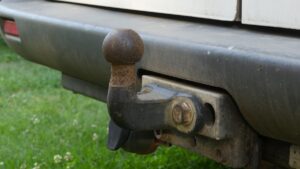
The hitch ball mounts inside your receiver and connects to the trailer’s coupler. Ball diameters come in three standard sizes:
READY TO STOP GUESSING?
LEARN THE RIGHT WAY. TOW ANYTHING. FEAR NOTHING.
Tow with total confidence. 55 video lessons, one-time payment.
ENROLL NOWOne-time payment - 30-Day money-back guarantee
- 1-7/8 inch — For light trailers up to about 2,000 lbs. Common on small utility and boat trailers.
- 2 inch — The most common size. Covers most cargo, boat, and camper trailers from 2,000 to 8,000+ lbs.
- 2-5/16 inch — For heavier trailers, fifth-wheels, and goosenecks. Rated up to 30,000 lbs when properly installed.
Always match the ball diameter to the coupler size stamped on your trailer’s A-frame tongue. The coupler should close completely around the ball with no gaps, and the latch should lock positively.
Don’t Forget the Ball Mount Drop or Rise
A ball mount is the shank that inserts into your receiver and holds the hitch ball. Because tow vehicles and trailers come in different heights, ball mounts are sold with different amounts of drop (ball is lower than the receiver) or rise (ball is higher). The goal is a level trailer — a trailer that’s nose-up or nose-down will tow poorly and can create dangerous sway.
To measure: park your tow vehicle on level ground, measure from the ground to the center of the receiver opening, then measure from the ground to the center of the trailer coupler. The difference tells you how much drop or rise you need.
Weight Distribution Hitches
If your trailer’s tongue weight exceeds about 10–15% of your tow vehicle’s curb weight, a standard ball mount may not be enough. A weight distribution hitch uses spring bars to redistribute that nose-heavy load across all four wheels of the tow vehicle, restoring steering feel and braking performance. They’re commonly required when towing larger travel trailers or toy haulers with half-ton trucks.
Pintle Hitches and Other Special Types
Ball hitches are by far the most common for consumer trailers, but other hitch types exist for specialized applications:
- Pintle hitch — A hook-and-ring design used on heavy commercial and military trailers. Handles rough terrain better than a ball.
- Fifth-wheel hitch — Mounts in the truck bed and couples to a kingpin on the trailer. Offers much more stability for large RVs and horse trailers.
- Gooseneck hitch — A ball mounted in the bed, used with commercial livestock and flatbed trailers. Extremely high weight ratings.
What Size Trailer Hitch Do I Need? Quick Checklist
- Look up your vehicle’s max tow rating and tongue weight capacity in the owner’s manual or manufacturer towing guide.
- Determine the hitch class that fits within those limits.
- Match the receiver size to your vehicle’s frame mounting points.
- Check the coupler size on your trailer to get the right ball diameter.
- Measure drop/rise to ensure a level trailer when loaded.
- If tongue weight is close to 10–15% of your vehicle’s curb weight, consider a weight distribution system.
Getting your hitch sizing right is the foundation of safe towing. If you’re still unsure, a local hitch installer can measure your specific setup and recommend the correct components — it’s worth the quick visit before you head down the road.
Ready to go deeper? Check out our guides on how to choose a trailer hitch and understanding your towing capacity for more detail.
Related: Once you’ve chosen your hitch class, don’t forget the trailer ball itself. See our guide on what size trailer ball you need — ball diameter, weight rating, and shank size all need to match your coupler and hitch mount. Hitch receiver classes follow the SAE J684 standard, which defines the weight ratings and dimensions for every hitch class used in North America.
Ready to Tow With Confidence?
TowPro Academy is a Class C towing course built for truck owners who tow their own trailers. 55 lessons covering everything from hookup to backing up — one-time payment, learn at your own pace.
Start the Course — $50 One-TimeStop guessing. Start towing with confidence.
The TowPro Course walks you through every skill in real road scenarios.
Step-by-step video instruction, towing calculators, and a printable checklist — everything in one place for $50.
Enroll Now — $50 →Read Next
- How to Choose a Trailer Hitch
- What Is Tongue Weight?
- Towing Glossary
- New to Towing? Start Here
- Complete Beginner’s Guide to Trailer Towing
Frequently Asked Questions
What size trailer hitch do I need?
Choose a hitch class and receiver size that exceed your fully loaded trailer weight and match your vehicle’s tow rating. Most passenger vehicles use a 1.25″ receiver, while trucks and SUVs use a 2″ receiver.
How do I measure my hitch receiver size?
Measure the square opening of the receiver tube. A 1.25″ opening is typically Class I–II, and a 2″ opening is Class III and up. The correct ball mount must match this size.
What is the difference between hitch size and hitch class?
Receiver size (1.25″ or 2″) describes the tube opening, while hitch class (I–V) describes weight capacity. You must match both to your trailer and vehicle for a safe tow.
Can I tow a heavy trailer with a small hitch?
No. Towing a trailer that exceeds your hitch’s rated capacity risks equipment failure and loss of control. Always select a hitch whose maximum weight rating comfortably exceeds your loaded trailer.
Learn More with TowPro Academy
Ready to master every aspect of safe, confident towing? The full TowPro Academy towing course walks you through hitching, weight distribution, braking, backing up, and real-world road handling step by step — so you can hit the road prepared and tow with total confidence.
FREE DOWNLOAD
The Towing Safety Checklist Every Tower Needs
Stop guessing. Use this exact pre-trip checklist to stay safe every time you hitch up. Download it free — no experience required.
⬇ Get My Free ChecklistFree PDF · No spam, ever · Unsubscribe any time
About the Author
Jeff McDonough
Founder, TowPro Academy — Professional Towing Instructor
Jeff has 10+ years and 200,000+ personal towing miles with bumper-pull trailers, fifth wheels, gooseneck trailers, and flatbeds. He created TowPro Academy to give Class C towers professional-level knowledge.
Read Full Bio →RELATED ARTICLES
- ›How to Buy a Used Trailer: What to Look For Before You Commit
- ›Towing Laws by State: What Every Driver Needs to Know
- ›Trailer Maintenance Schedule: What to Inspect, When, and Why
- ›How to Tow a Car on a Flatbed Trailer: The Complete Guide
Ready to put it all together? Enroll in TowPro Academy and master safe towing in 55 step-by-step lessons.
Related Articles

FREE DOWNLOAD
Never Miss a Safety Check Again
The exact 66-point checklist Jeff uses on every tow, so small problems get caught before they become breakdowns. Free and printable, zero guesswork.
✅ Get the Free Checklist