Table of Contents
ToggleIn This Article
- Why Memorial Day Weekend Is the #1 Towing Weekend of the Year
- Step 1: Check Your Rig Before You Leave the Driveway
- Step 2: Load It Right — Weight Balance Matters More Than You Think
- Step 3: Beat the Traffic (Or Know How to Handle It)
- Step 4: Towing in Summer Heat — What Changes
- Step 5: Campground Arrival — Backing In Like a Pro
- Step 6: If You’re Towing a Boat — Ramp Etiquette and Safety
- Step 7: Have an Emergency Plan Before You Go
- Frequently Asked Questions
Memorial Day weekend towing tips can mean the difference between a smooth holiday getaway and a stressful breakdown on a packed highway. Every year, Memorial Day weekend marks the unofficial start of summer — and it’s the single busiest towing weekend in the United States. Campers, boat trailers, ATVs, and toy haulers all hit the road at the same time. If you’re one of the millions hitching up this weekend, these tips will help you get there safely, get set up confidently, and enjoy every mile of the trip.
Why Memorial Day Weekend Is the #1 Towing Weekend of the Year
Memorial Day marks the beginning of camping season, the first big boat launch weekend, and the first long road trip of the year for millions of families. According to AAA, Memorial Day is consistently one of the top three travel weekends of the year — and a huge percentage of that traffic involves trailers.
That combination creates unique challenges: heavier traffic, more inexperienced towers on the road, campgrounds that fill up fast, and summer temperatures that put extra stress on your tow vehicle. Going in prepared isn’t optional — it’s what separates the towers who arrive relaxed from the ones who arrive frazzled (or don’t arrive at all).
Whether you’re towing a pop-up camper, a bass boat, a fifth wheel, or a flatbed full of ATVs, the seven steps below cover everything you need for a safe, confident Memorial Day haul.
Step 1: Check Your Rig Before You Leave the Driveway
More breakdowns happen on holiday weekends simply because people skip the pre-trip inspection in their rush to get out the door. Don’t be that person. A 20-minute check the night before your trip prevents hours of roadside misery.
Hitch and Connection
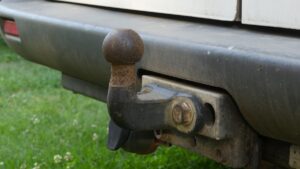
Confirm your ball mount is the correct size and rating for your trailer. Tighten the hitch ball and check that it’s not worn or pitted. Connect your safety chains in an X pattern under the tongue — not just looped loosely. Make sure your trailer coupler is fully seated and locked. A loose hitch is one of the most dangerous and preventable situations on the road.
Lights and Brakes
Plug in your trailer wiring and walk the trailer while a helper watches: running lights, brake lights, turn signals (both sides), and reverse lights. If your trailer has electric brakes, test the brake controller in your cab — a gain setting that worked last fall may need adjustment after a winter in storage. Dead trailer lights are a leading cause of rear-end collisions on holiday weekends.
READY TO STOP GUESSING?
LEARN THE RIGHT WAY. BUILD THE SKILLS TO TOW MORE SAFELY.
Build the skills to tow more safely. 51 video lessons, one-time payment.
ENROLL NOWOne-time payment - 30-Day money-back guarantee
Tires on Both Vehicles
Trailer tires sit unused all winter and can lose significant pressure — or develop sidewall cracks that aren’t visible until they fail at highway speed. Check pressure on all trailer tires and your tow vehicle tires the morning of your trip, not the week before. Always carry a spare for the trailer and know where the jack points are before you need them at the side of I-95.
For a complete walkthrough of everything to check before any tow, use our full Pre-Trip Towing Checklist — it covers everything from wheel bearings to breakaway cables.
Step 2: Load It Right — Weight Balance Matters More Than You Think
Watch a Free Lesson
See how TowPro Academy teaches it step by step. Jeff McDonough, the founder, has 10+ years and 250,000+ miles of towing behind him.
How you load your trailer directly affects how it handles at 65 mph with a line of cars behind you. The general rule: 60% of your cargo weight in the front half of the trailer, 40% in the rear. This keeps adequate tongue weight on the hitch ball — typically 10–15% of your total trailer weight — and prevents the tail-wagging oscillation that can trigger trailer sway.
Common Loading Mistakes
Coolers, gear bags, and camp furniture get shoved in last and end up at the back of the trailer — exactly the wrong place for heavy items. Bikes, kayaks, and ATVs hung off the rear rack add unsprung weight behind the axle. If your trailer feels “light at the tongue” when you test tongue weight with a scale, redistribute cargo forward before you leave.
When You Need Weight Distribution
If your trailer’s loaded tongue weight exceeds 10–15% of your truck’s front GAWR, a weight-distribution hitch is not optional — it’s a safety requirement. These systems transfer load back to the front axle, restoring steering feel and preventing the rear sag that causes both handling problems and premature wear on your truck’s suspension. See our guide on how to choose the right trailer hitch and weight distribution setup for your truck.
Step 3: Beat the Traffic (Or Know How to Handle It)
Memorial Day weekend traffic is unlike any other. Highways fill up by Thursday afternoon and don’t clear until late Sunday or Monday night. Towing in heavy stop-and-go traffic is harder on your truck — and harder on your nerves — than open highway driving. Here’s how to handle it.
Leave Early (Very Early)
The single best Memorial Day towing tip is simple: leave Thursday evening or Friday before 6 AM. Traffic models consistently show Friday morning departures before dawn arriving hours ahead of mid-morning departures. An early start is also cooler, which reduces heat stress on your transmission and trailer tires.
Keep More Following Distance Than You Think You Need
A loaded trailer dramatically increases your stopping distance. A truck-and-trailer combo that weighs 14,000 pounds needs roughly twice the stopping distance of the same truck without a trailer. In holiday traffic where cars are constantly cutting in front of towers, you need a buffer zone that feels almost embarrassingly large. Maintain at least 4–6 seconds of following distance, and 8–10 seconds in slow-and-go conditions.
Know Your Limits — and Your Truck’s
Before you get on the highway, confirm your tow vehicle’s towing capacity and that your loaded trailer is safely within it. Overloaded trucks overheat, understeer, and have dangerously compromised braking. Review our Towing Capacity Explained guide if you’re not 100% sure your truck and trailer combination is legal and safe.
Free Download
Never Miss a Safety Check Again
The exact 66-point checklist Jeff runs before every tow, so small problems get caught before they become breakdowns. Enter your email and we will send it over.
Free PDF · Instant download · No spam, unsubscribe any time
Step 4: Towing in Summer Heat — What Changes
Memorial Day weekend often brings the first real heat of the year — and towing in hot weather introduces risks that simply don’t exist in spring or fall driving. Being aware of these makes all the difference.
Transmission Temperature
Automatic transmissions run hot under towing load. In summer heat, on grades, or in stop-and-go traffic, transmission temperatures can spike into the danger zone quickly. If your truck has a tow/haul mode, use it — it adjusts shift points to keep the transmission cooler. Consider an aftermarket transmission temperature gauge if you tow regularly. If your truck signals an overtemp warning, pull over, shift to Park, and let it idle with A/C off until temperatures drop.
Trailer Tire Blowouts
Trailer tire blowouts are far more common in summer because heat causes tire pressure to rise — and already over-inflated tires are blowout candidates. Check pressures in the morning before the pavement and ambient temps rise. Note that trailer tires (ST-rated) run hotter than passenger tires under the same load, and they have shorter service lives. Never run tires that are more than 5–6 years old on a trailer, regardless of tread depth.
Managing Trailer Sway in Summer Wind
Summer afternoons bring crosswinds and gusts from passing trucks that can set an improperly loaded trailer swaying. Knowing how to recognize and respond to trailer sway before it escalates is one of the most important safety skills for holiday weekend towing. Speed is the #1 factor: slower speeds make sway far less likely to develop. Stay in the right lane, use cruise control on open highways, and reduce speed proactively when you see large trucks ahead.
Step 5: Campground Arrival — Backing In Like a Pro
After hours on the highway, you arrive at a packed campground with a line of people watching you try to back into a tight site. This is where inexperienced towers get flustered. A few simple techniques make this part of the trip stress-free.
Get Out and Look First
Before attempting to back in, get out of the truck and walk the entire site. Note the slope, any obstacles (fire rings, water spigots, low branches), and the best angle of approach. Spending 60 seconds walking the site prevents 20 minutes of pulling forward and trying again. Ask your passengers to spot from both sides — you need eyes on all four corners of the trailer, not just the back.
Use the Low-Hand Rule for Steering
When backing, place your hand at the bottom of the steering wheel. Move your hand left — the trailer goes left. Move your hand right — the trailer goes right. This simple mental model removes confusion about which way to turn when you’re watching mirrors. Go slowly, use small inputs, and don’t overcorrect. If the trailer gets into an angle you don’t like, pull forward and set up again — there’s no shame in a second or third attempt.
If you’re working on your backing skills, our post on backing a trailer with confidence covers mirrors, angles, and techniques for every situation — including tight campground sites.
Step 6: If You’re Towing a Boat — Ramp Etiquette and Safety
Boat ramps on Memorial Day weekend are famously chaotic. The combination of excited boaters, slippery concrete, and saltwater environments creates a unique set of challenges. Getting in and out of the water smoothly — and not being “that guy” who backs a trailer into the lake — takes preparation.
Prep Your Boat in the Parking Lot First
Remove all tie-down straps (except the bow strap), load coolers and gear, attach dock lines, check the drain plug, and get the engine ready before you approach the ramp. The ramp is not a prep area. Pulling onto a busy ramp to “get organized” is the fastest way to make enemies on holiday weekends — and it backs up the line for everyone waiting behind you.
Keep Your Wheel Bearings Out of the Water
Submerging hot wheel bearings in cold lake water can cause bearing failure through thermal shock and water infiltration. This is the #1 cause of trailer bearing failures reported after Memorial Day weekend. Back the trailer far enough to float the boat, but keep the hubs out of the water if possible. If you must fully submerge the hubs, repack or inspect bearings after every several launches — especially at saltwater ramps.
Loading the Boat Back on the Trailer
Line the boat up with the trailer before you back in — don’t try to steer the boat onto a misaligned trailer. Drive onto the trailer under low power, secure the bow strap immediately, then kill the engine. Pull forward, secure all straps, stow dock lines, and replace the drain plug before you drive away. A trailer pulled out of the water with the drain plug still out will empty its bilge onto the highway and — in some states — earn you a ticket.
Step 7: Have an Emergency Plan Before You Go
Holiday weekend roadside assistance response times can stretch to 3–5 hours. The more you can handle yourself, the better. A basic roadside kit for towers should include: a spare trailer tire (mounted, inflated, and with the correct lug pattern), a hydraulic jack rated for your trailer’s axle weight, a lug wrench that fits your trailer (often a different size than your truck’s), road flares or LED triangles, a heavy-duty tow strap, jumper cables or a jump pack, and water for both you and your radiator.
Know What to Do If Sway Starts
If your trailer starts swaying on the highway, do not brake hard and do not accelerate. Hold the steering wheel firmly and straight. Gradually reduce speed by lifting off the throttle. If sway continues, apply your trailer brake controller manually (the manual override lever) — this slows the trailer independent of your truck and straightens the combination. Once stable, pull to the right lane or a rest stop and investigate the cause before continuing. Read our full guide on trailer sway control so you know these steps cold before you need them.
Bad Weather on the Way Home
Late May brings afternoon thunderstorms in much of the country. If you’re caught towing in heavy rain or gusty crosswinds on the Monday drive home, slow down significantly — trailer handling degrades dramatically in wet conditions. Our guide to towing safely in bad weather gives you specific techniques for rain, wind, and low visibility with a trailer.
Learn It Right the First Time
- 51 video lessons, hitching to backing to emergencies
- 950+ pages of PDF guides and checklists
- Final exam: score 80% to earn your certificate of completion
- 30-day refund if it is not for you
$79 through Oct 31 (regularly $99)
Frequently Asked Questions
What is the best time to leave for a Memorial Day towing trip?
Thursday evening or very early Friday morning (before 6 AM) is the best departure window. These slots let you miss the Friday afternoon surge that clogs highways from noon through midnight. Arriving early also means cooler temperatures during your tow — better for your transmission, tires, and nerves.
Can I tow my RV or trailer in Memorial Day weekend traffic?
Yes, but you need to be more conservative than usual. Increase following distances significantly, stay in the right lane, and reduce your speed — even 5 mph below highway traffic creates a crucial buffer. Avoid passing situations unless absolutely necessary. Holiday traffic is more erratic, with faster lane changes and more distracted drivers than typical highway conditions.
How do I keep my truck from overheating while towing in summer?
Use tow/haul mode to raise shift points and reduce transmission heat. On long grades, downshift manually to keep RPMs up and reduce heat buildup in the torque converter. If you’re in bumper-to-bumper traffic, turn off the A/C briefly if engine temperatures rise — the compressor adds significant load. Make sure your coolant system has been serviced and the radiator is clean. A transmission cooler is worth installing if you tow regularly in summer.
What should I do if my trailer tire blows out on the highway?
Grip the steering wheel firmly and hold your lane — do not panic-brake. Gradually reduce speed by lifting off the gas. Apply light, steady braking once speed drops below 45 mph. Signal and move to the right shoulder as smoothly as possible. Turn on hazard lights and exit the vehicle away from traffic before assessing the damage. If possible, pull far enough off the pavement that you can change the tire safely away from traffic.
Do I need a special license to tow a camper or boat trailer?
In most U.S. states, a standard Class D driver’s license is sufficient for personal-use towing of trailers under 26,000 lbs combined vehicle weight. However, requirements vary by state — some states require an endorsement for trailers over a certain weight or for rigs over a combined length. Check your specific state’s DMV requirements if you’re towing a large fifth wheel or heavy gooseneck trailer.
How many hours should I drive per day when towing?
Towing is significantly more mentally demanding than regular driving. Most experienced towers recommend limiting towing to 400–500 miles per day, with breaks every 2 hours. Fatigue while towing is dangerous — reaction times slow and backing maneuvers become much harder when you’re tired. Plan an arrival time that gives you at least an hour of daylight for setup, and don’t push driving hours just to “make it” to your destination.
Make This Your Best Memorial Day Yet
Memorial Day weekend towing doesn’t have to be stressful. For NHTSA’s holiday highway safety data and tips that apply specifically to high-traffic weekends, see NHTSA’s holiday driving safety resources — Memorial Day consistently ranks among the most dangerous weekends of the year for road travel. With the right preparation, the right setup, and the skills to handle whatever the road throws at you, the drive is just the first part of a great holiday. If you want to go into this summer not just prepared but genuinely confident behind the wheel of a towing rig, check out the TowPro Academy online towing course — built specifically for drivers who want to stop guessing and start towing right.
Related Articles
- The Pre-Trip Towing Checklist Every Driver Needs
- Trailer Tire Safety Guide
- How to Load a Trailer Properly
- Trailer Sway Control Guide
- Towing Glossary: Every Key Towing Term Defined
Ready to Tow With Confidence?
TowPro Academy is a trailer towing course built for truck owners who tow their own trailers. 51 lessons covering everything from hookup to backing up — one-time payment, learn at your own pace.
Start the Course — $79 One-TimeStop guessing. Start towing with confidence.
The TowPro Course walks you through every skill in real road scenarios.
Step-by-step video lessons, a final exam, and printable lesson guides and checklists — everything in one place for $79 (fall special, reg. $99).
Enroll Now — $79 (Fall Special, reg. $99) →Read Next
About the Author
Jeff McDonough
Founder of TowPro Academy, 10+ years and 250,000+ miles of towing experience.
He built TowPro Academy to give everyday trailer owners a clear, step-by-step way to learn what he learned on the road.
Read Full Bio →RELATED ARTICLES
- ›How to Turn With a Trailer: Right Turns, Left Turns and Tight Corners
- ›Towing a Trailer on the Highway: Merging, Lane Changes and Passing
- ›Do You Need a Special License to Tow a Trailer?
- ›Towing a Trailer in Snow, Ice and Rain: Winter Towing Tips
Ready to put it all together? Enroll in TowPro Academy and master safe towing in 51 step-by-step lessons.