Horse Trailer Towing Safety: A Beginner’s Guide
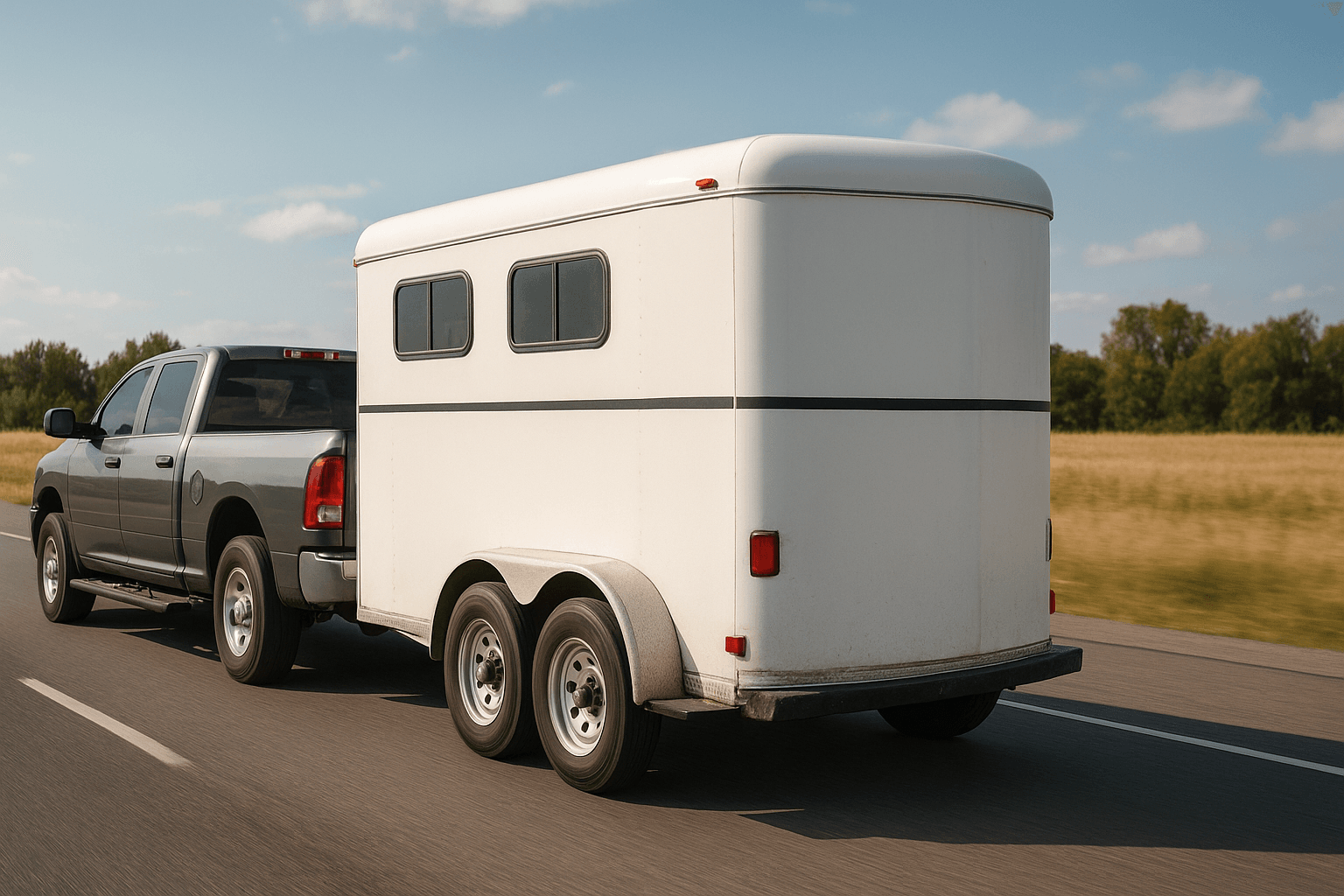
Horse trailer towing safety is different from towing any other load, because your cargo is alive, tall, and shifts its weight as you drive. For beginners, getting the fundamentals right protects both your horses and everyone else on the road. This guide covers the essentials, from matching your tow vehicle to loading technique, braking, and what to do in an emergency, so you can hit the road with confidence.
Choose the Right Tow Vehicle
Start by matching your tow vehicle to a fully loaded horse trailer, not an empty one. A two-horse trailer with horses, tack, water, and hay can easily exceed 7,000 pounds. Confirm your truck’s towing capacity, payload, and hitch rating all comfortably exceed that loaded weight, and leave a safety margin rather than towing at the limit. If you are unsure how to read those numbers, our guide on selecting the right tow vehicle walks through it.
Load and Balance Your Horses Correctly
Watch a Free Lesson
See how TowPro Academy teaches it step by step. Jeff McDonough, the founder, has 10+ years and 250,000+ miles of towing behind him.
How you load directly affects stability. Place a single horse on the driver’s side, where roads crown toward the shoulder, and load the heaviest horse there when hauling two. Keep roughly 60% of the weight ahead of the trailer axles to maintain proper tongue weight, which prevents dangerous sway. Always secure the horses, close dividers, and double-check that the trailer floor and mats are sound before loading.
Keep Your Horses Calm and Secure
A calm horse is a safer load. Load and unload in a quiet, well-lit area, use non-slip mats, and give horses time to settle before you pull away. Drive smoothly: gradual acceleration, gentle braking, and slow, wide turns keep your horses balanced and reduce stress on long hauls.
Master Braking and Trailer Brakes
A loaded horse trailer needs far more stopping distance than your truck alone. Make sure your trailer’s electric or surge brakes are properly adjusted, in line with NHTSA trailer safety recommendations and that your brake controller is set for the loaded weight. Brake earlier and more gently than you would when driving unloaded, and increase your following distance significantly.
Pre-Trip Safety Checks
Before every trip, inspect tire pressure and condition, wheel lug nuts, the hitch and safety chains, the breakaway cable, and all trailer lights. Check that dividers, latches, and doors are secure. A few minutes of inspection prevents the most common causes of roadside trouble.
Plan for Emergencies
Carry a basic equine first-aid kit, extra water, a spare tire with the tools to change it, and your horses’ health paperwork. Know your route and where large-animal vets are located along the way. If you feel sway begin, ease off the accelerator gently rather than braking hard or steering sharply.
READY TO STOP GUESSING?
LEARN THE RIGHT WAY. BUILD THE SKILLS TO TOW MORE SAFELY.
Free Download
Never Miss a Safety Check Again
The exact 66-point checklist Jeff runs before every tow, so small problems get caught before they become breakdowns. Enter your email and we will send it over.
Free PDF · Instant download · No spam, unsubscribe any time
Build the skills to tow more safely. 51 video lessons, one-time payment.
ENROLL NOWOne-time payment - 30-Day money-back guarantee
Learn More with TowPro Academy
Safe horse trailer towing comes from practice and the right fundamentals. For a complete, step-by-step system covering hitching, weight distribution, braking, and on-road control, explore the TowPro Academy towing course and tow with more confidence.
Learn It Right the First Time
- 51 video lessons, hitching to backing to emergencies
- 950+ pages of PDF guides and checklists
- Final exam: score 80% to earn your certificate of completion
- 30-day refund if it is not for you
$79 through Oct 31 (regularly $99)
Frequently Asked Questions
What size tow vehicle do I need for a horse trailer?
Choose a vehicle whose towing capacity, payload, and hitch rating all exceed your fully loaded trailer weight, including horses, tack, hay, and water. A two-horse trailer loaded often exceeds 7,000 pounds, so avoid towing at your vehicle’s limit.
Where should I position a single horse in a two-horse trailer?
Load a single horse on the driver’s side. Roads crown toward the shoulder, so the driver’s side is the higher, more stable position and helps keep the trailer balanced.
How do I stop a horse trailer from swaying?
Maintain proper tongue weight by keeping about 60% of the load ahead of the axles, keep speeds moderate, and ensure trailer brakes are adjusted. If sway starts, ease off the accelerator gently rather than braking hard or steering sharply.
What should I check before every horse trailer trip?
Check tire pressure and tread, lug nuts, the hitch, safety chains, breakaway cable, lights, and that all dividers and doors are latched. Also confirm the floor and mats are sound before loading.
Stop guessing. Start towing with confidence.
The TowPro Course walks you through every skill in real road scenarios.
Step-by-step video lessons, a final exam, and printable lesson guides and checklists — everything in one place for $79 (fall special, reg. $99).
Enroll Now — $79 (Fall Special, reg. $99) →RELATED ARTICLES
- ›How to Park a Trailer (and Secure It So It Won’t Roll)
- ›1/2 Ton Truck Towing Capacity: What You Can Really Tow
- ›How to Adjust a Weight Distribution Hitch (Step-by-Step)
- ›How to Back a Trailer Into a Campsite (Even the Blind Side)
Ready to put it all together? Enroll in TowPro Academy and master safe towing in 51 step-by-step lessons.