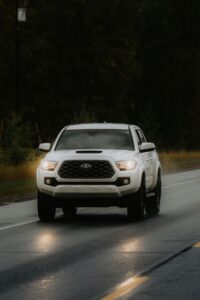
Following these night towing tips keeps you safe — towing after dark is a reality for most drivers — early departures to beat traffic, late arrivals after a long day on the road, or situations that simply couldn’t wait for daylight. These night towing tips will make those after-dark drives manageable and often necessary, but it introduces a specific set of challenges that daytime towing doesn’t. Reduced visibility, driver fatigue, limited depth perception, and the way other drivers perceive your rig in the dark all change the equation significantly. This guide covers what you need to know to tow safely after sunset.
Essential Night Towing Tips: Why Night Towing Is More Demanding
The physics of towing don’t change at night, but everything that depends on vision — lane awareness, obstacle detection, judging gaps for lane changes, reading the road surface ahead — becomes more difficult. When you’re managing a trailer behind you, your attention load is already higher than normal driving. Add reduced visibility to that equation and the margin for error shrinks. Depth perception decreases in low light, making it harder to judge distances accurately. Other drivers may not immediately register that your rig is longer than a standard vehicle, particularly when entering highways or making lane changes.
Driver fatigue compounds every one of these factors. Fatigue impairs reaction time, reduces peripheral awareness, and narrows the cognitive bandwidth you need to monitor trailer behavior while managing traffic. If you’re tired, the safest choice is always to stop and rest — no destination is worth the risk.
Before You Leave: Night-Specific Pre-Trip Checks
Your standard pre-trip inspection (see The Pre-Trip Towing Checklist Every Driver Needs) applies at night just as during the day, but lighting becomes your top priority. Check every trailer light with extra care before departing after dark:
- Brake lights — Non-functioning brake lights at night are both illegal and genuinely dangerous. Other drivers cannot see your rig’s profile clearly in the dark, and brake light failure can cause a rear-end collision with very little warning.
- Turn signals — Lane changes and turns are more hazardous at night. Make sure both turn signals on the trailer are working before you leave.
- Running lights and marker lights — These outline your trailer’s profile for other drivers. On wider trailers, side marker lights help other drivers judge your trailer’s width in the dark. Ensure all are working.
- Reflective tape — Retroreflective tape on the sides and rear of a trailer dramatically improves its visibility at night. Required on commercial trailers but worth adding to any recreational trailer as well. If your trailer doesn’t have reflective striping on the rear and sides, consider adding DOT-approved reflective tape.
If you notice any lighting issues during your check, fix them before departing or reschedule for daylight if repairs aren’t possible. Our guide on How to Wire Trailer Lights covers diagnosis and repair for the most common trailer lighting failures.
Found a dead light during your check? Use our trailer lights troubleshooting guide to track down the problem before you leave.
Adjust Your Towing Mirrors for Night Driving
Watch a Free Lesson
See how TowPro Academy teaches it step by step. Jeff McDonough, the founder, has 10+ years and 250,000+ miles of towing behind him.
Towing mirrors are important in the daytime — they’re essential at night. If you’re not using extended towing mirrors that let you see along the full length of the trailer and behind it, you’re significantly limited in your ability to detect vehicles in adjacent lanes or approaching from behind. At night, the visual information you’d normally use to compensate for poor mirrors (scanning other vehicles, reading road markings) is all reduced. Adjust your mirrors before departing to minimize blind spots. Set them slightly downward at the outer edge so you can see the rear corner of your trailer and the lane beside it simultaneously. For everything you need to know about towing mirror selection and setup, see our guide on Towing Mirrors.
READY TO STOP GUESSING?
LEARN THE RIGHT WAY. BUILD THE SKILLS TO TOW MORE SAFELY.
Build the skills to tow more safely. 51 video lessons, one-time payment.
ENROLL NOWOne-time payment - 30-Day money-back guarantee
Speed, Following Distance, and Lane Discipline
Reduce your speed at night relative to your daytime towing speed. Many experienced towers reduce speed by an additional 5–10 mph after dark, especially on unfamiliar roads or in areas with wildlife activity. Your headlights illuminate only so far ahead — traveling at high speed means you’re always partly “driving into the dark,” with less time to react to road changes, debris, or animals.
Increase your following distance significantly. The standard “two seconds” rule for normal car driving doesn’t apply when towing, and it applies even less at night when reaction times are reduced and visibility is limited. A three-to-four-second following distance at minimum is appropriate when towing after dark. On wet or slippery roads, increase this further.
Free Download
Never Miss a Safety Check Again
The exact 66-point checklist Jeff runs before every tow, so small problems get caught before they become breakdowns. Enter your email and we will send it over.
Free PDF · Instant download · No spam, unsubscribe any time
Stay in the right lane whenever possible on multi-lane roads. This reduces the number of lane change maneuvers you need to make, keeps you away from faster traffic, and gives you a clear shoulder to pull onto if something goes wrong with the trailer. Lane discipline also makes your rig more predictable to other drivers, who can see your trailer’s lights in the dark and anticipate your movements more easily if you’re not weaving between lanes.
Managing Trailer Sway at Night
Trailer sway can happen at any time, but at night it’s harder to detect early and harder to respond to quickly. Your peripheral vision is reduced, road surface changes are harder to see in advance, and fatigue slows your reaction time. The best approach to sway at night is the same as during the day — prevention. Load the trailer correctly with 60% of weight ahead of the axle. Maintain tongue weight at 10–15% of total trailer weight. Keep speed reasonable. Use a weight distribution hitch for heavier loads. If sway does develop, the response is unchanged: ease off the accelerator, hold the wheel straight, activate trailer brakes manually if equipped, and let the vehicle decelerate. Review our complete guide on Trailer Sway Control if you’re not completely clear on the correct response.
Fuel Stops and Rest Breaks
Use every fuel stop at night as a maintenance check. Walk the trailer with a flashlight and inspect: strap tension on any loaded cargo, tire visual condition, all lights still functioning, hitch connection still solid, and safety chains still in place. Night travel involves temperature drops, road vibration, and conditions that can affect your rig differently than daytime driving — a quick check every hour or two is worthwhile.
Fatigue management matters more at night than during the day. If you feel drowsy, pull over. A rest area, truck stop, or well-lit parking lot is always the right choice over pushing on when you’re tired. No schedule is worth the risk of falling asleep at the wheel with a trailer behind you.
Parking and Backing at Night
Backing a trailer at night is more challenging than in daylight — you can only see what your tow vehicle’s backup lights illuminate, and your cameras (if equipped) may not show enough detail in low light. Take your time. If you’re backing into an unfamiliar location, get out and walk the area with a flashlight before attempting the maneuver. Check for obstacles, drop-offs, overhead clearances, and surfaces that might not support your rig’s weight. Have a spotter if possible — a person standing clear of the trailer’s path with a flashlight who can signal you is enormously helpful in tight spots after dark. See our guide on Backing a Trailer with Confidence for the fundamentals, and apply extra caution in the dark.
Towing in Bad Weather at Night
Rain, fog, or snow at night combines two challenging driving conditions into one. If you encounter bad weather after dark, slow down significantly, increase following distance, and consider whether continuing is the right decision. Wet roads at night with a trailer are significantly more hazardous than dry roads during the day. If conditions deteriorate to the point where you can’t see clearly or maintain safe speed, pull off the road at a safe location and wait for conditions to improve. No trip is worth an accident. For more on handling challenging weather conditions while towing, see our guide on How to Tow Safely in Bad Weather.
The Bottom Line
Night towing requires extra vigilance, better lighting, reduced speed, increased following distance, and heightened awareness of fatigue. The fundamentals of safe towing don’t change — weight distribution, proper hitch setup, trailer sway prevention, and pre-trip inspection all apply just as they do during the day. What changes is the environment in which you’re applying those skills, and the margin for error that environment provides. Prepare your rig for visibility, take your time, and rest when you’re tired. Night towing done right is safe and manageable. Done carelessly, it’s one of the highest-risk situations a recreational tower will encounter.
TowPro Academy’s truck towing course walks you through all the core skills — setup, weight distribution, backing, sway control, and safe driving — in 51 structured video lessons for a one-time payment of $79.
Further Reading
- How to Tow Safely in Bad Weather: Rain, Wind, and Winter Driving Tips
- Trailer Sway Control: Why It Happens and How to Stop It
- Towing Mirrors: Do You Need Them and Which Type Is Right for Your Truck?
- The Pre-Trip Towing Checklist Every Driver Needs
Related Articles
- The Pre-Trip Towing Checklist Every Driver Needs
- How to Tow Safely in Bad Weather
- Trailer Sway Control Guide
- Start Here: Your First Steps to Safe Trailer Towing
- Towing Glossary: Every Key Towing Term Defined
Stop guessing. Start towing with confidence.
The TowPro Course walks you through every skill in real road scenarios.
Step-by-step video lessons, a final exam, and printable lesson guides and checklists — everything in one place for $79 (fall special, reg. $99).
Enroll Now — $79 (Fall Special, reg. $99) →Read Next
- Towing in Bad Weather
- Pre-Trip Towing Checklist
- What Is Trailer Sway?
- Complete Beginner’s Guide to Trailer Towing
- Full Towing Glossary
Ready to Tow With Confidence?
TowPro Academy is a trailer towing course built for truck owners who tow their own trailers. 51 lessons covering everything from hookup to backing up — one-time payment, learn at your own pace.
Start the Course — $79 One-TimeLearn It Right the First Time
- 51 video lessons, hitching to backing to emergencies
- 950+ pages of PDF guides and checklists
- Final exam: score 80% to earn your certificate of completion
- 30-day refund if it is not for you
$79 through Oct 31 (regularly $99)
Frequently Asked Questions
Is towing at night more dangerous?
Night towing carries added risk because of reduced visibility, driver fatigue, and harder-to-judge distances. With proper lighting, extra following distance, and regular rest breaks, it can still be done safely.
What lights do I need for safe night towing?
Ensure all trailer running lights, brake lights, and turn signals work, and confirm your tow vehicle’s headlights are properly aimed. Reflective tape on the trailer improves your visibility to other drivers.
How can I reduce fatigue when towing after dark?
Take a break at least every two hours, avoid driving during your body’s natural low-energy hours, stay hydrated, and share driving if possible. Pull over the moment you feel drowsy.
Should I drive slower at night while towing?
Yes. Lower your speed so you can stop within the distance your headlights illuminate, and increase your following distance to give yourself more reaction time in the dark.
Learn More with TowPro Academy
Ready to master every aspect of safe, confident towing? The full TowPro Academy towing course walks you through hitching, weight distribution, braking, backing up, and real-world road handling step by step — so you can hit the road prepared and tow with more confidence.
RELATED ARTICLES
- ›Towing Laws by State: What Every Driver Needs to Know
- ›Towing Mirrors: Do You Need Them and Which Type Is Right for Your Truck?
- ›Trailer Sway Control: Why It Happens and How to Stop It
- ›How to Tow Safely in Bad Weather: Rain, Wind, and Winter Driving Tips
Ready to put it all together? Enroll in TowPro Academy and master safe towing in 51 step-by-step lessons.